Short answer
Before you put the spraying drone away for winter: empty and clean the spraying system completely (no liquid left in the tank, flow meter, pumps or hoses), store the batteries at 40% to 60% in a dry place, check the propellers and screws, update the software and keep copies of your data. Note: according to DJI’s manuals, a battery that goes five months or more without being charged and discharged is no longer covered by the warranty.
The spraying season is closing, and for many growers the spraying drone will sit idle until spring. How you store it decides what you find when you need it again: a machine ready for work, or a string of faults, costs and lost days at the start of the new season. Most winter damage does not come from use, but from what is forgotten before storage.
The checklist below is based on the official manuals of the T100, T70P and T25P and applies, with small adjustments, to every Agras model. Exact values and procedures differ by model, and the manual of your own drone always takes precedence.
The checklist at a glance
| Step | What you do | What you avoid |
|---|---|---|
| 1. Spraying system | Empty, rinse, clean the filter and the sprinkler discs, dry completely | Liquid left in the tank, pump and hoses; blockages and corrosion |
| 2. Batteries | Store at 40–60%, dry place, charge and discharge cycle every three months | A low battery for months; five months without a cycle voids the warranty |
| 3. Machine | Check propellers, screws, plastic and rubber parts, clean the sensors | Hidden wear and chemical residue on metal parts |
| 4. Software and data | Updates, export flight files, renew subscriptions | Last-minute updates, lost data |
| 5. Storage | Cool, dry room, machine and batteries apart | Damp, fumes from chemicals and fertilizers |
| 6. Spring check | Clean-water test, short test flight, spare parts ready | The first test happening in the field |
1. Cleaning the spraying system
The spraying system is the most sensitive point at winter close-down. Chemical residue that dries inside the tank, hoses or sprinklers causes blockages and corrosion that show up in spring, at the worst moment.
- Empty the system completely. DJI’s manuals ask you to remove or empty the tank for transport or long-term storage and to keep the machine clean and dry, with no liquid left in the tank, flow meter, pumps or hoses.
- Rinse with clean water and repeat until no trace of product comes out, following the cleaning procedure in your model’s manual.
- Tank strainer: clean it. DJI asks you to check before each working day whether it is blocked, and its maintenance list includes replacing the tank strainer.
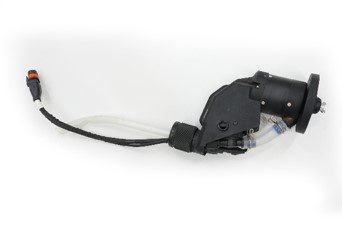
- Centrifugal sprinklers: on current Agras models the spray is produced by a spinning disc that breaks the liquid into droplets. With the drone off and the battery removed, rinse the disc and the sprinkler cover with clean water until every trace of residue is gone. DJI asks you to clean the discs thoroughly when atomization gets worse, and to replace them if it stays very poor.
- Check the sprinkler: look at the lower spinner disc and the lower cover of the motor for wear, the motor port for corrosion, and the spray lance screws for loosening. Finish with a clean-water test and see whether the flow is even. For disassembly and cleaning, follow your model’s manual.
- Let the line dry open. The liquid left in the pump and hoses is the risk: in a store that falls below zero it can freeze and destroy the parts. That is why fully purging the system before storage is not optional.
Safety and the environment
Wear gloves and the protective equipment required by the product label when cleaning. Do not pour rinse water into drains, ditches or near water: dispose of it as the label and your local rules require.
2. Batteries: the most expensive part, the most common damage
Agras smart batteries are the most expensive consumable on the machine and suffer more from wrong storage than from flights. A battery should never be left with a very low charge all winter.
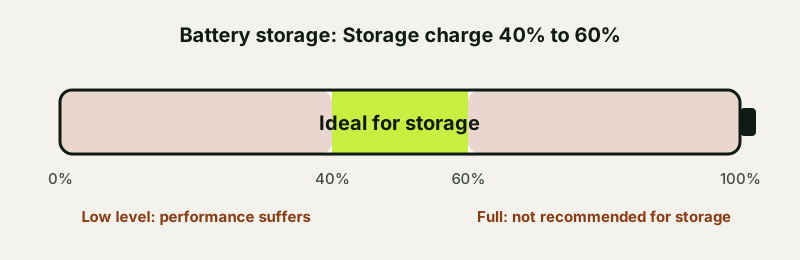
- 40% to 60% charge. In the T100, T70P and T25P manuals, when the level is critically low DJI asks you to charge the battery to 40–60% and not to store it with a low level for a long time, because performance suffers. DJI’s general battery guide gives 40–65%; 40–60% satisfies both.
- Out of the machine and dry. Disconnect the battery from the aircraft and keep it in a dry environment, away from explosive or hazardous materials and metal objects.
- A cycle every three months. The manual asks you to fully charge and discharge the battery at least once every three months. If a battery has not been charged or discharged for five months or more, it is no longer covered by the warranty.
- Long storage over three months: DJI recommends a battery safety bag or box, in a room-temperature space. A low-level battery stored for a long time goes into deep hibernation and needs charging to wake up.
- Cleaning and transport: do not clean the battery with water or alcohol, only the terminals with a dry cloth. For transport, discharge to 25% or less and never transport a damaged battery.
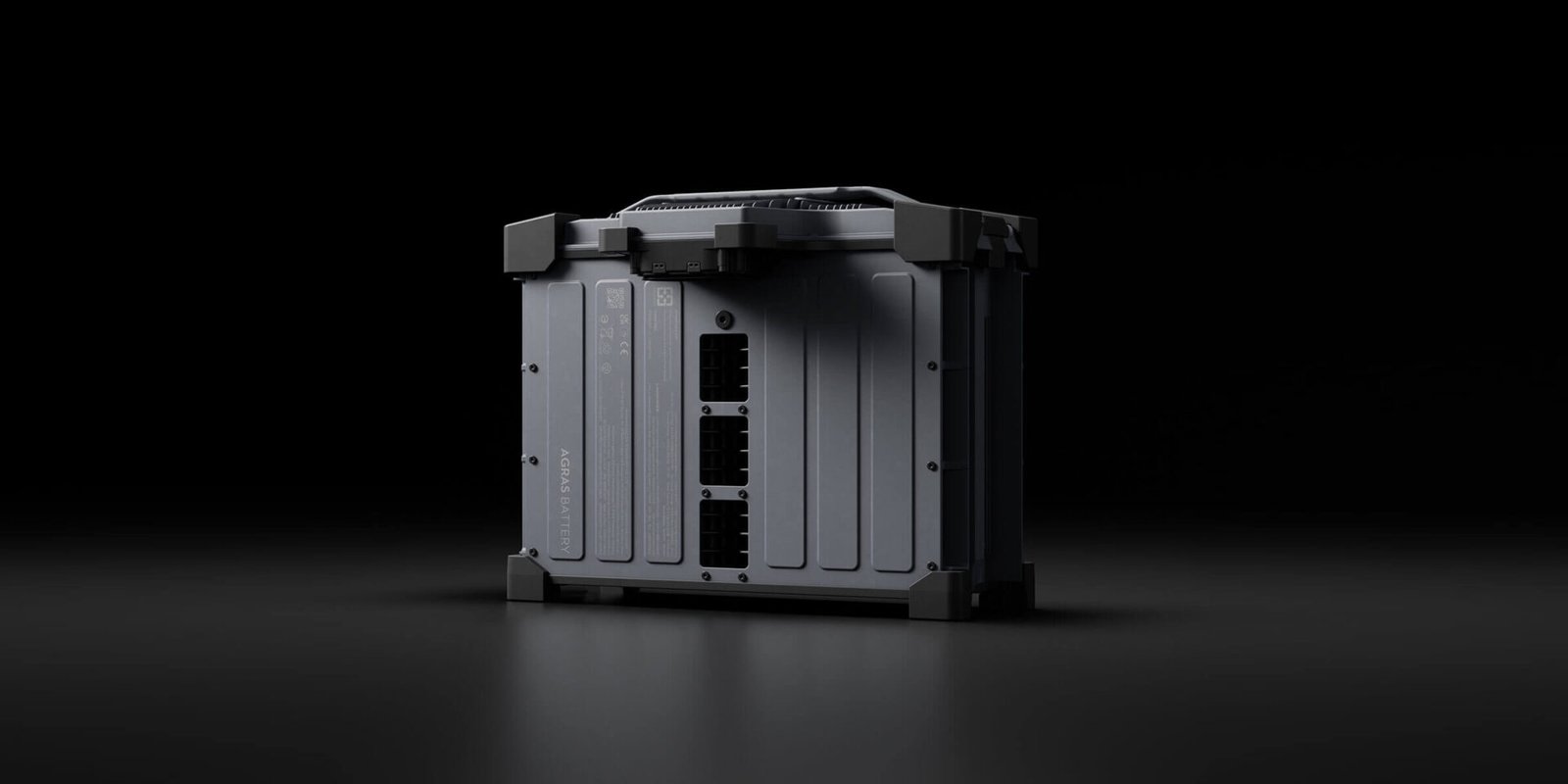
Batteries and chargers for each model are in the spare parts and accessories.
Safety
Never leave batteries charging unattended and never use a battery that has swollen, been hit or smells. Contact the service centre before charging it again.
3. Mechanical check and cleaning of the machine
DJI sets maintenance every 100 flights or after 20 flight hours, whichever comes first. The end of the season is the natural moment.
- Propellers: check them one by one for wear and looseness, and replace worn or loose propellers and washers. A propeller with hidden wear does not show in flight until it causes a problem.
- Plastic and rubber parts: check them for ageing.
- Chemical residue: wipe it off the motors with a damp cloth and let them dry naturally before the next power-up. This limits corrosion and extends their life.
- Screws and connections: tighten the frame screws and check that the motors turn freely.
- Sensors: with the drone off, clean the radar module and the vision cameras with a clean, soft cloth. If the model has LiDAR, rinse its optical window with clean water, blow it with compressed air and wipe it with a soft cloth, without tank liquids or chemicals.
- Dust and cables: clean the machine and the cooling grilles, check the cables for moisture or strain and dry the machine thoroughly before storing it.
4. Software, data and subscriptions
Winter is the best time for the jobs that do not fit into a full spraying day.
- Updates: update the firmware of the drone, the spraying system and the controller now, while there is time to test, rather than in spring just before the first outing.
- Backups: flight data is recorded in the drone’s internal memory and exported through DJI Assistant 2 or the Agras app. Keep copies of the year’s files and maps before your phone or computer changes.
- Subscriptions: check the expiry of your RTK subscription and related services and renew them in good time. To understand what RTK does, read What is RTK in farming.
- Controller: do not let it reach 0%, as it can be damaged by over-discharge. For long storage, DJI asks you to leave it at 40–60%.
5. Proper storage
- A cool, dry room at room temperature. For the batteries, DJI’s guide gives 22–28 °C as ideal. The machine goes in clean and dry. A damp basement does more harm than many flights.
- Separately: store the machine and the batteries apart and, where possible, in their original cases. Before any transport, remove the battery and fold and secure the propellers.
- Away from chemicals: keep it away from fertilizers and pesticides, because their fumes corrode the electronics and the metal parts.
6. The check before the first flight of spring
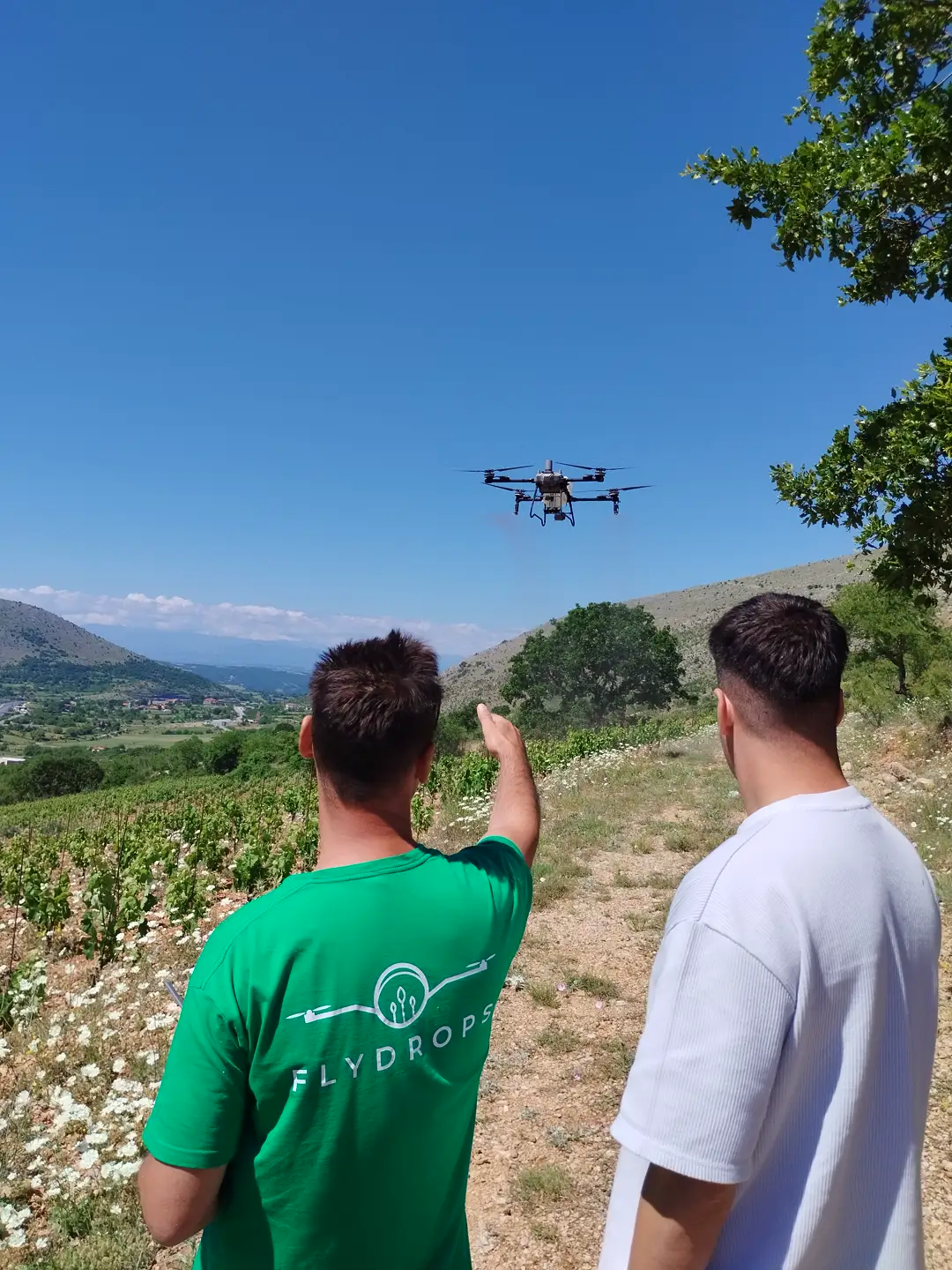
The season starts right with a short check before the first outing, not out in the field.
- Repeat the mechanical check: propellers, screws, motors, cables.
- Test the spraying system with clean water and check the flow and the atomization.
- Make a short test flight with a light load and check how the machine behaves.
- Have the consumable spare parts ready: propellers, spray discs and filters, so a small fault does not keep the machine out of action. See the spare parts and accessories.
Prefer to have the service centre do it?
FLYDROPS is the first recognised service centre for DJI Agras in Northern Greece, in Koufalia. We handle inspection and repair and carry genuine spare parts. Ask us what a check before the new season includes and book it before spring, while the workshop has time: call (+30) 2391 301149 or write to info@flydrops.gr.
Frequently asked questions
What level should I store the spraying drone batteries at?
At 40% to 60%, in a dry place. That is what the Agras T100, T70P and T25P manuals say for batteries with a very low level, and DJI’s general battery guide gives 40–65% for batteries left unused for more than 10 days.
Can I leave water in the tank and hoses?
No. DJI asks that no liquid remain in the tank, flow meter, pumps or hoses. If the store drops below zero, the liquid left behind can freeze and destroy the parts.
How often do I need to deal with the batteries in winter?
At least once every three months: a full charge and discharge. If a battery goes five months or more without being charged or discharged, it is no longer covered by the warranty, according to DJI’s manuals.
When is the best time for a service?
Right after the season closes or before spring, when you do not need the drone and the workshop has time. DJI sets maintenance every 100 flights or 20 hours. If you wait for the first spraying day, every fault means lost days.
Which spare parts should I have ready for spring?
The consumables: propellers, spray discs and filters. That way a small fault does not keep the machine out of action at the start of the season.
Sources (DJI): user manuals for the AGRAS T100, AGRAS T70P and AGRAS T25P (Storage, Transportation and Maintenance, and Battery sections), and the Battery Routine Maintenance Guide. The T55 manual was not available for checking; values and procedures differ by model, so follow your drone’s manual.